 GOLDSNIPER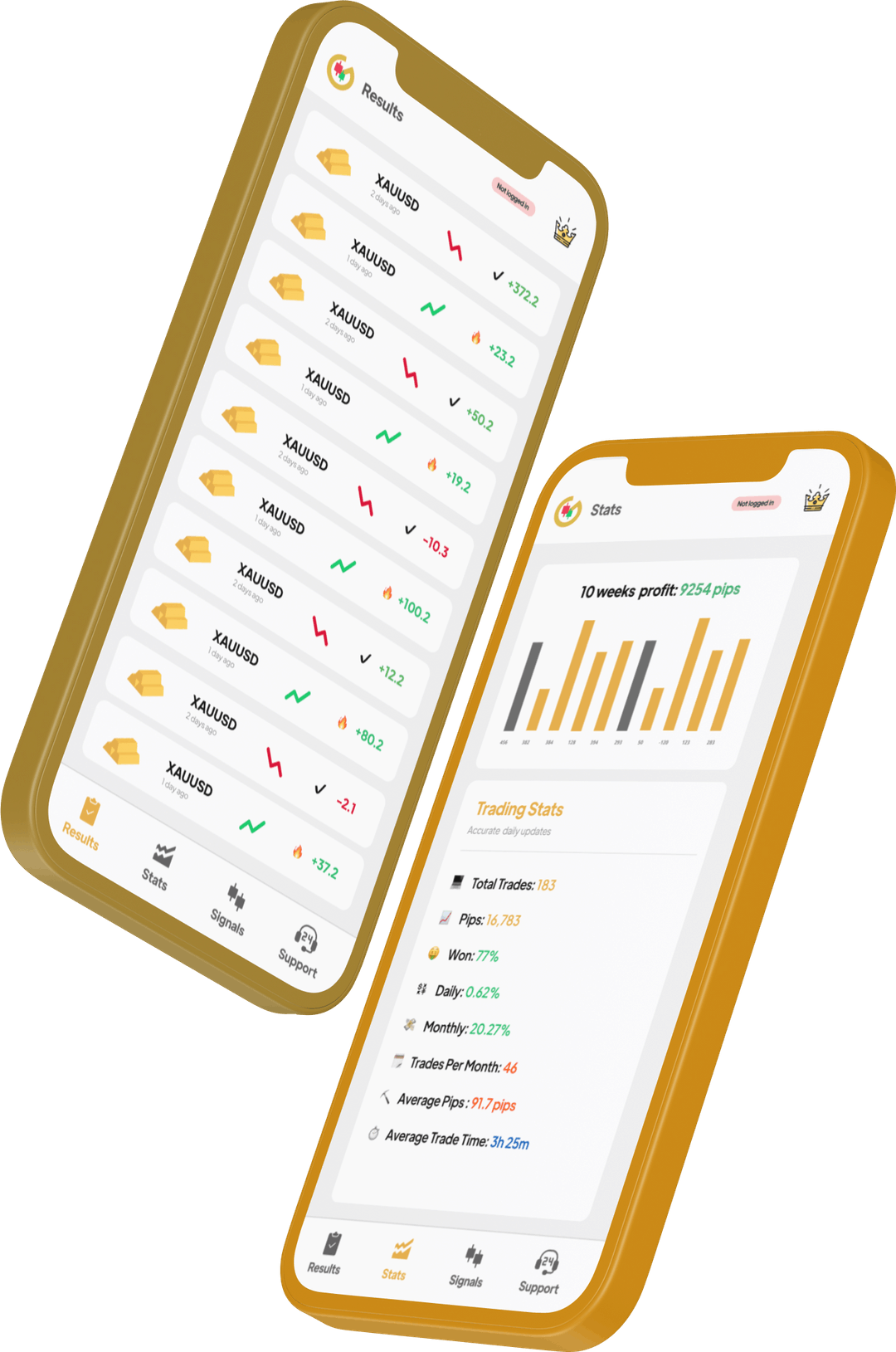
Gold (XAU/USD) has broken above $4,400 in 2026, driven by record central bank purchases, a weakening US dollar under tariff uncertainty, and the Federal Reserve's gradual easing cycle. GoldSniper's analyst team maintains a bullish bias with a Q3 2026 target range of $4,500–$4,800. Key support to watch: $4,200.
The drivers behind gold's 2026 rally.
Macro backdrop: dollar weakness + rate expectations
The US dollar has weakened materially in 2026, partly due to tariff-driven uncertainty and growing concerns about US fiscal sustainability. A weaker dollar mechanically lifts gold. Simultaneously, the Fed's cutting cycle has pushed real yields down from their 2023 peaks, reducing the opportunity cost of holding gold. Both forces are structurally bullish and neither shows signs of reversing.
Central bank buying: the structural floor
Central banks globally purchased over 1,000 tonnes of gold per year in 2023 and 2024, a pace that continued into 2026. China, India, Poland, Turkey, and Gulf states are diversifying reserves away from US Treasuries. This is long-duration structural buying that creates a price floor regardless of short-term macro moves. Each dip below $4,200 has attracted significant institutional buying.
Fed policy reversal
If US inflation re-accelerates and forces the Fed to resume hiking, real yields would spike and the dollar would strengthen. Core CPI above 0.3% sustained for two or more months would challenge the bullish thesis. A monthly close below $4,000 would be the technical signal to revise the outlook to neutral.
Technical structure: higher lows, intact breakout
Gold broke out of the $2,000–$2,100 multi-year range in late 2023, accelerating through $2,400, $3,000, and $4,000. Each breakout set a higher low. The weekly uptrend is intact. $4,200 — previously resistance — is now key support. The medium-term structure does not suggest a top.
Key support & resistance for 2026.
What the banks are saying.
Gold outlook this week.
Falling real yields + dollar weakness support upside. Buy dips to $4,350 with SL below $4,300. Primary catalyst: US CPI data this week.
Technical picture.
Trend structure
Gold remains in a well-defined weekly uptrend with higher lows at $2,100, $2,600, $3,000, and $3,800. The most recent impulse from $4,000 to $4,550+ confirmed the breakout. Price is consolidating in a $4,350–$4,550 bullish flag. A weekly close above $4,650 targets $4,800–$5,000.
Momentum & oscillators
Daily RSI (14) oscillating between 55–70 — bullish, not overbought. MACD above signal line on daily and weekly. Volume profile shows highest volume node at $4,200–$4,300 — strong support. $4,550 area has low-volume node — expect fast moves through this zone if it breaks.
Key levels to trade
Bullish: buy pullbacks to $4,350, SL at $4,280, targets $4,550 / $4,800. Bearish only on daily close below $4,200 — then target $4,000 with SL at $4,250. The 50 EMA on daily at $4,320 is the line in the sand.
Quarter-by-quarter forecast.
How we forecast gold.
See the technical and macro analysis behind our gold price targets.
Gold forecast FAQ
What is the gold price forecast for 2026? +
Gold has broken above $4,400 in 2026. Our analyst team's Q3 target range is $4,500–$4,800, supported by central bank buying, dollar weakness, and the Fed's easing cycle. The bullish structure remains intact above $4,200.
Will gold continue to rise in 2026? +
The structural case remains bullish: record central bank purchases, a weakening dollar, and falling real yields. The primary risk is a Fed policy reversal (resumed hikes). Barring that, the bias is higher.
What is the key support level for gold right now? +
$4,200 is the key short-term support. $4,000 is the structural line — a monthly close below it would signal a significant trend change. Central bank buying has consistently absorbed dips in this range.
Could gold reach $5,000 in 2026? +
$5,000 is the upper end of our Q4 scenario, requiring at least one Fed rate cut plus continued central bank buying and sustained dollar weakness. It's achievable but not the base case — treat it as the optimistic scenario, not a forecast.
What is the gold price forecast for tomorrow? +
Short-term gold forecasts depend on upcoming data releases. On non-event days, gold typically trades within the prior day's range. Check our weekly outlook section for the current week's expected range and key levels. For real-time signals, download the GoldSniper app.
Is gold expected to go up or down this week? +
Our current weekly bias is detailed in the outlook section above. Gold tends to rise when the dollar weakens or real yields fall — and fall when US economic data surprises to the upside. For the most current daily bias, our signals app provides real-time analysis updated every trading session.
Trade the 2026 gold rally.
Professional signals with exact entry, SL & TP. Download the GoldSniper app free.